
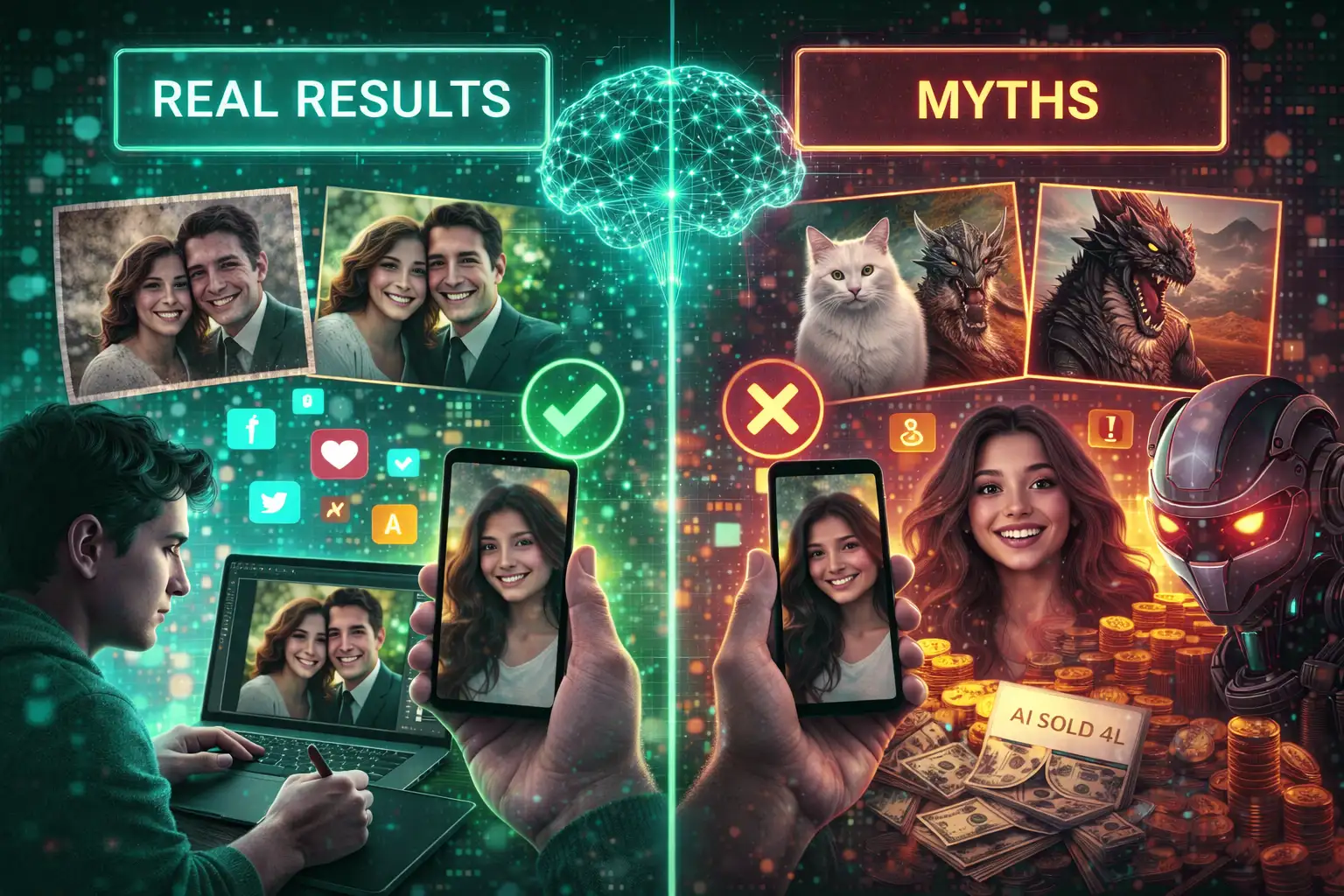
AI image enhancement sounds magical — and sometimes that creates unrealistic expectations. Let’s clear the confusion.
Advertisement
Myth 1: AI Can Fix Any Image
AI is powerful, but it isn’t a wizard.
- Extremely low-resolution images have limits
- Severely damaged photos may lose original context
AI enhances what’s possible — not the impossible.
Myth 2: AI Just Sharpens Images
Modern AI does far more than sharpening.
- Reconstructs missing details
- Understands faces, textures, and objects
- Improves clarity without harsh edges
If it only sharpened, results would look unnatural.
Myth 3: AI Ruins Image Quality
Bad AI ruins images. Good AI preserves realism.
- No plastic skin
- No oversharpened edges
- No artificial textures
Quality depends on how the AI is trained and used.
Advertisement
Myth 4: AI Replaces Human Creativity
AI doesn’t replace creativity — it removes friction.
- Designers work faster
- Photographers focus on storytelling
- Creators skip repetitive tasks
Humans still make the final call.
Myth 5: Free AI Tools Are Useless
Free tools are not useless — they’re just limited.
- Great for quick enhancements
- Perfect for casual users
- Limited control and customization
Pro tools exist for deeper control, not because free ones fail.
What Actually Works in AI Image Enhancement
Real results come from:
- Good source images
- Purpose-built AI models
- Clear enhancement goals
- Prompt-based control (in Pro tools)
Advertisement
Use AI the Right Way with LUNOX
LUNOX focuses on realistic enhancement — not exaggerated effects.
Try LUNOX AI Image EnhancementFinal Thoughts
AI image enhancement isn’t magic — it’s technology done right.
When expectations are realistic, results are impressive.