
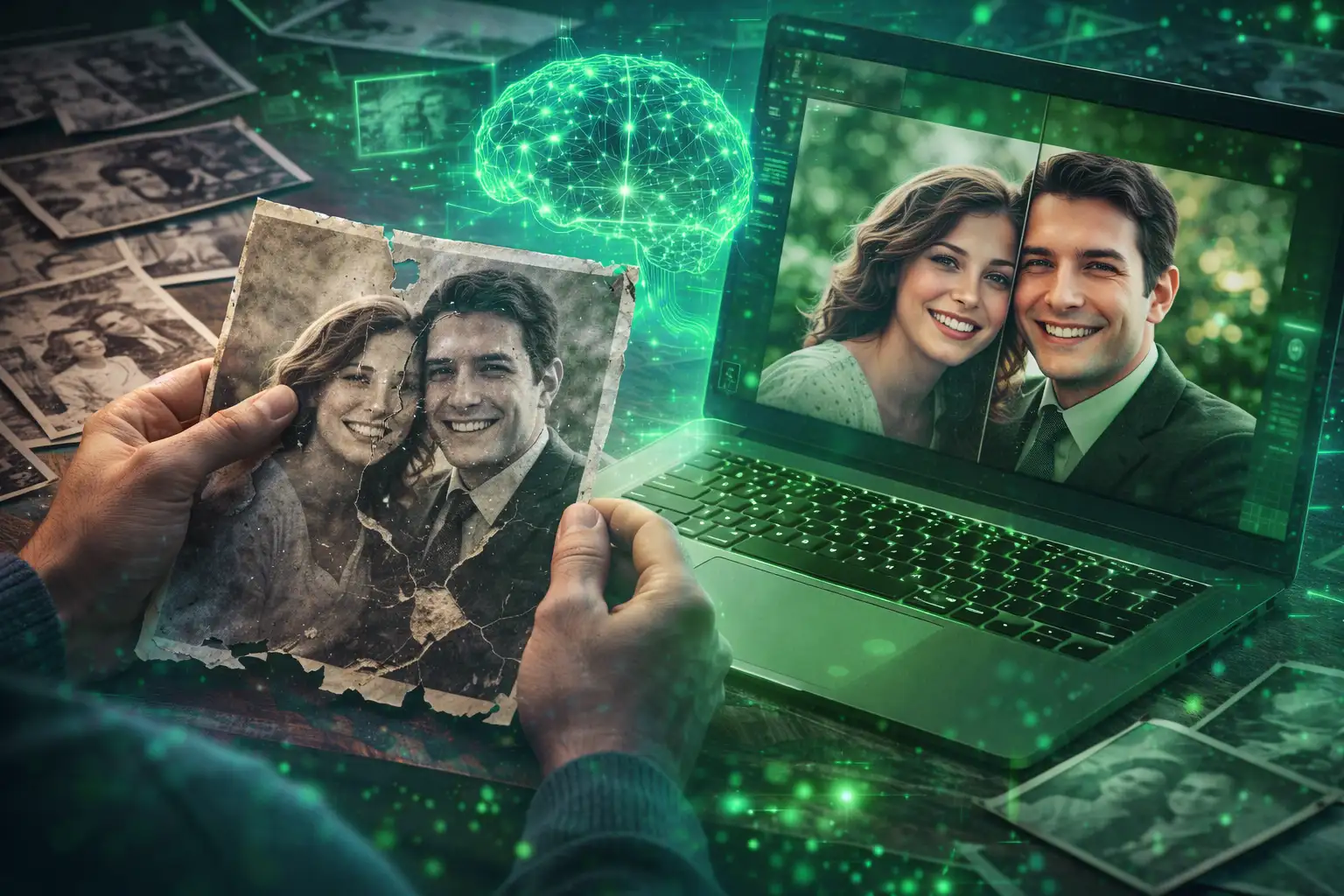
Old photos aren’t just images — they’re memories. A grandparent’s smile. A childhood home. A moment frozen in time. That’s why restoring old photos is emotional… and risky.
Advertisement
Why Old Photos Degrade Over Time
Time is brutal to photographs. Common problems include:
- Fading due to sunlight
- Scratches and dust
- Low resolution scans
- Color loss or yellowing
Once detail is lost, traditional tools struggle to recover it.
Why Manual Restoration Often Fails
Classic restoration techniques rely heavily on guessing.
- Sharpening creates harsh edges
- Noise reduction removes facial detail
- Color correction alters skin tones
The result? A photo that looks edited — not remembered.
Advertisement
How AI Restores Photos Differently
AI doesn’t guess. It learns.
- Analyzes facial structure
- Understands textures like skin and fabric
- Reconstructs missing details naturally
- Preserves the original emotion
The goal isn’t perfection — it’s authenticity.
What AI Can Fix (And What It Shouldn’t)
AI is great at:
- Reducing blur
- Enhancing facial clarity
- Restoring contrast
AI should NOT:
- Invent unrealistic features
- Over-smooth faces
- Change expressions
Does AI Change the Original Photo?
Good AI doesn’t change memories — it reveals them. The best restorations make people say:
“That’s exactly how I remember it.”
Advertisement
Restore Old Photos with Care
LUNOX is designed to enhance old photos gently, keeping emotions intact while restoring clarity.
Restore an Old Photo with LUNOXFinal Thoughts
Old photos don’t need to look new. They need to look real.
AI restoration works best when it respects the past — not replaces it.